The $29 guide
The hot-climate
sauna guide.
How to build, place and care for a sauna where it's hot and humid.
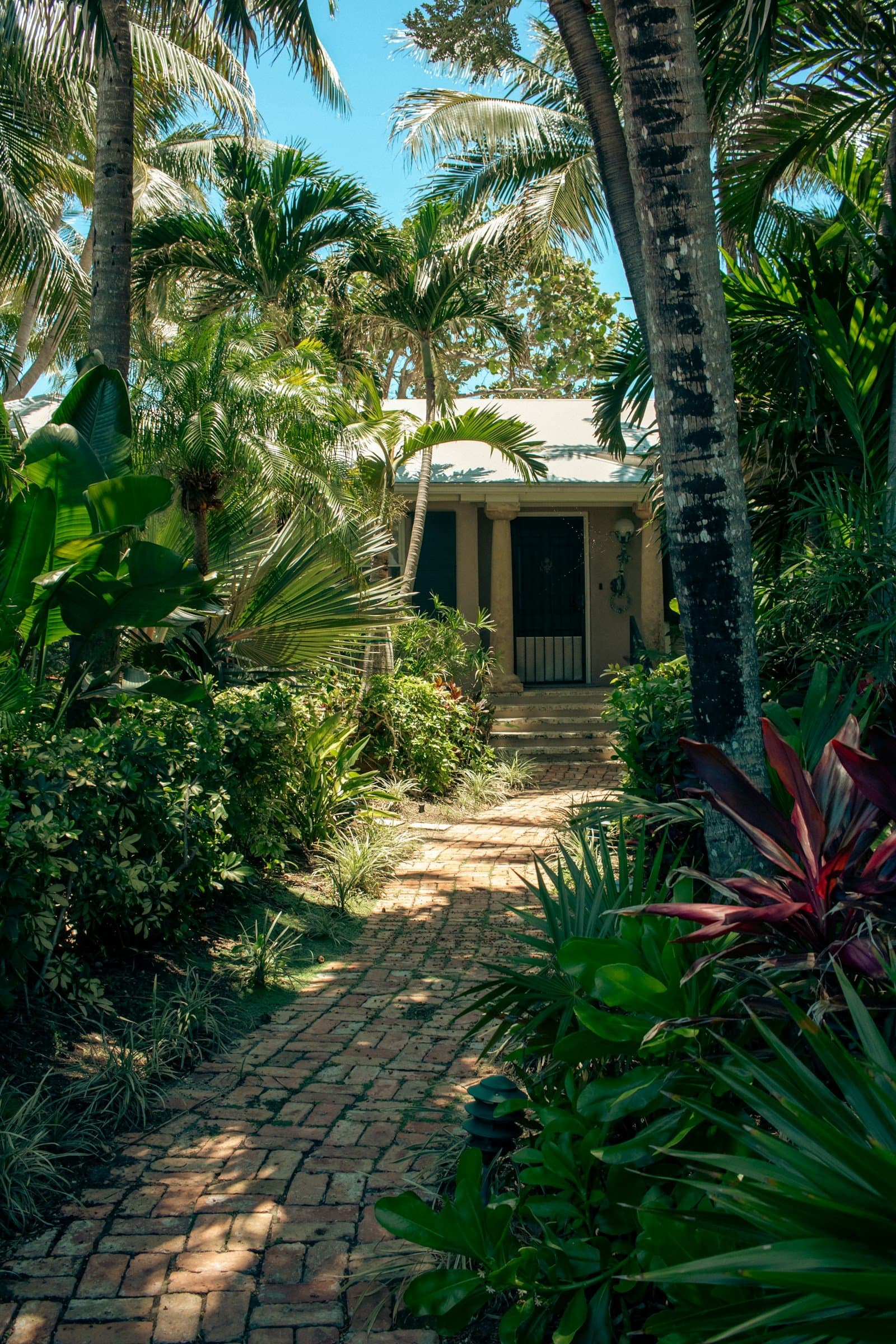
Almost every sauna plan was written for Finland or Minnesota. In Florida and the Gulf Coast, the problems that ruin saunas are different: humidity in the walls, sun on the roof, termites year-round, and no cold air to cool off in.
We run a sauna and cold plunge studio in Tampa Bay. This is what we wish every backyard builder here knew before they started.
A free preview
Three things northern sauna plans never tell you.
Most sauna advice is written for Finland and Minnesota. Here's a taste of what changes in Florida, free.
Placement
The sun can push your exterior walls to 130–140°F.
Direct afternoon sun ages wood, seals and finishes fast. Siting the sauna in afternoon shade, or under a reflective metal roof, is the cheapest fix you'll ever make.
Walls
Never add a second vapor barrier on the outside.
In humid climates moisture pushes into walls from outside. Two barriers trap it between them, which is exactly how hidden mold starts. Your wall has to dry in both directions.
Care
Bake it dry after the last session.
Leave the heater on for 10–15 minutes with the door cracked and both vents open. Mold needs moisture, warmth and time, and this takes away the time.
Inside the full guide:
- The 7-layer wall, from paneling to siding, that dries in both directions
- The vent layout most first builds get wrong (and the cold feet it causes)
- Which exterior woods last in humidity, and which need re-oiling every 1–2 years
- How to keep termites out of the footings, year-round
- Why electric heaters beat wood-burning in humid climates
- The full mold-proof routine: after each session, monthly and yearly
- 3 ways to cool down between rounds when it's 85°F outside
- A before-you-build checklist: flood zone, HOA, permits and panel
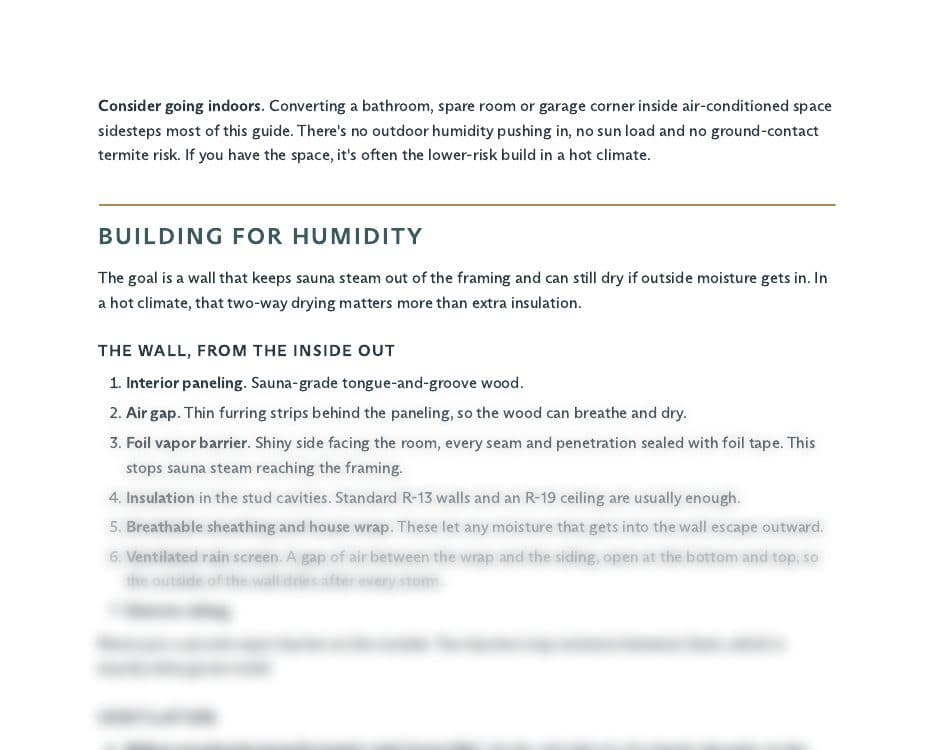 Inside the PDF
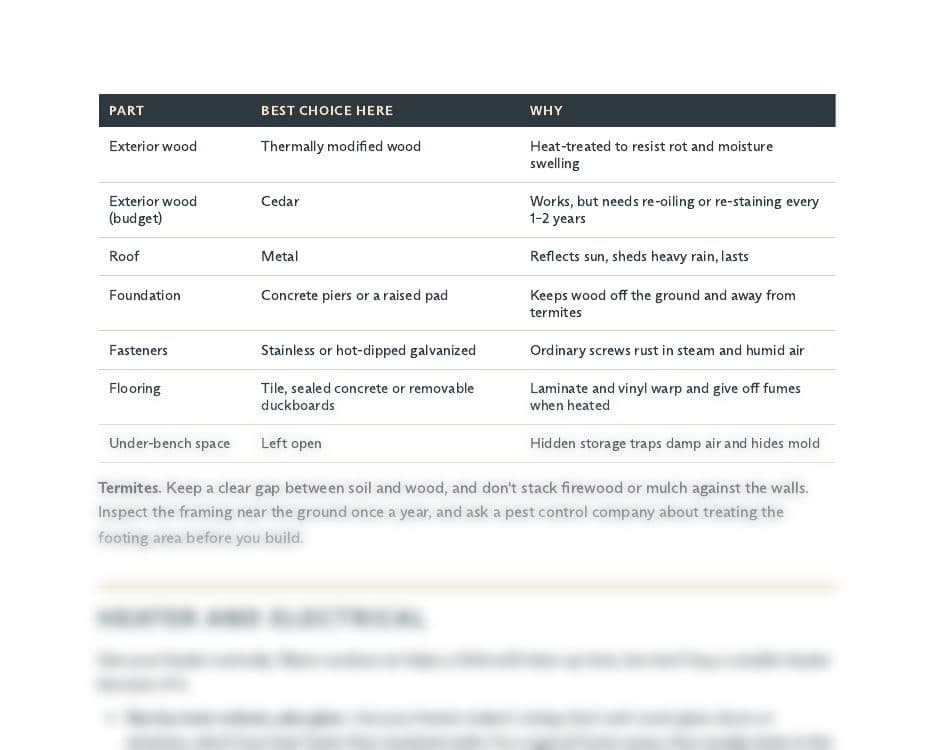 Inside the PDF
What's inside
Where to put it
Shade, elevation, drainage, flood zones, and when an indoor build is the smarter call.
Building for humidity
The wall, layer by layer, and a ventilation setup that dries the room.
Materials that last
Wood, roofing, fasteners, flooring and footings that stand up to heat and termites.
Heater and electrical
Sizing, electric vs wood, and what to sort out with your electrician.
The mold-proof routine
What to do after each session, every month and every year.
Using it in the heat
Cool-down options from a hose to a cold plunge, and a simple session to follow.
It's for you if
- —You live in Florida, the Gulf Coast or another hot, humid climate
- —You're planning a backyard sauna or already have one
- —You want it to last without fighting mold
$29
The Hot-Climate Sauna Guide
PDF guide. From the team behind a sauna and cold plunge studio in Tampa Bay.
For planning and education, not professional advice. Electrical work must be done by a licensed electrician, and code, permit and HOA rules vary by location.
Also from The Sauna Host
The Hidden Costs of Building a Sauna — $7 →